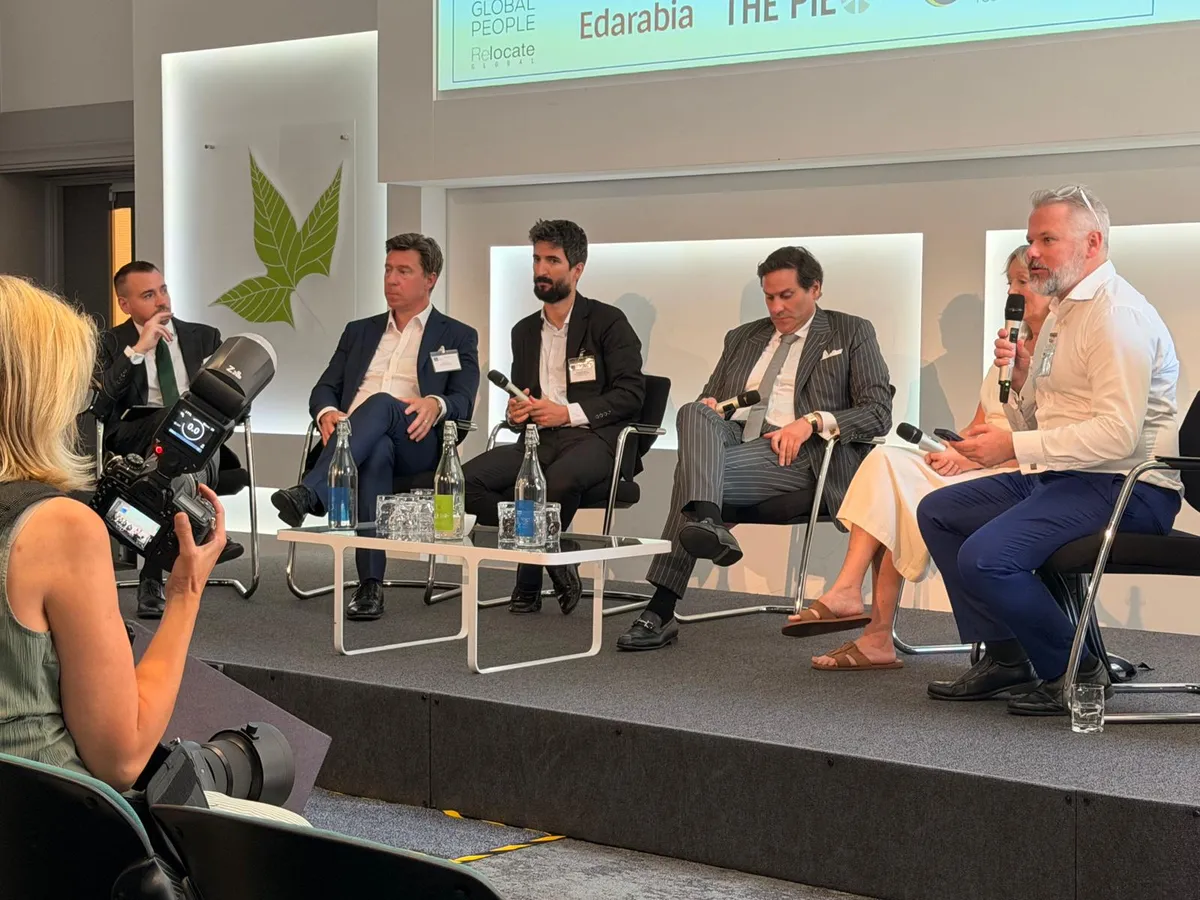
IPSEF Global 2026 Market Insights
Prepared by Matt Collins, Partner, Spencer Group
Headline
The story across every panel was the same: the era of “build a UK-branded school and they will come” is over almost everywhere. Markets are differentiating fast - by curriculum, by price point, by parental experience, and by who actually owns the brand locally. Differentiation, partnership and operator quality were common phrases throughout the day.
Global Trends — L.E.K.
• Iberia: significant growth still to come - not yet saturated, but increasingly competitive in the major cities.
• Greece & Cyprus: a mix of returning diaspora leaders and strong local operators is creating a strong market.
• Warsaw: fertile ground, arguably under-served, already popular with major groups.
• There are increasing opportunities for UK brands to license/support existing schools as turnaround and brand partner rather than operator - brand plus support, not bricks and mortar.
• UAE: 2023 cohort saw 95–98% re-enrolment; a 3–5% dip expected in 2026–27, with growth resuming after - supported by softer asset prices, falling rents and more working families being drawn back in.
• Differentiation matters more than ever – differentiated offers (curriculum, language, specialisms), not generic British, is how new entrants are standing out. Choose your lane and your positioning.
The Current Landscape: Inspired Education
AI is eroding the entry-level graduate job market, so schools need to build genuine not just career readiness but pre-employment readiness, Inspired have developed real-time boardroom-style scenarios for students in specific contexts (e.g. law), not generic teamwork exercises, in order to ensure their children truly stand out when leave school.
Edge Academies, Inspired’s new AI and project-based schools are planning to break the traditional “age clock, curriculum clock, exam clock” via with adaptive learning, meaning that the traditional linear pathway to exams no longer has to apply: six-week sprints, interdisciplinary afternoons, tech-enabled adaptive learning in the mornings.
The role of the modern Headteacher has changed: it is three jobs in one; community leader, academic leader, commercial leader. Balancing those priorities is a key component of success.
Middle East: Saudi Maturing, UAE Consolidating
Recent disruption in the region has had a slight impact on enrolment and growth, but recovery has already begun. Saudi Arabia arguably felt the impact least, but it did shift PIF’s own view of which national projects to back, and PIF’s project pipeline effectively sets headcount and workforce type across the sector. In turn this impacts school location and enrolment numbers.
In the UAE, choice is now so broad that the parental experience - not just the child’s - is increasingly a differentiator as schools focus on family retention. There was advice for groups moving into Saudi: the Kingdom is not yet as smooth as the UAE on operational and educational infrastructure, and a strong Saudi partner is non-negotiable for first-time entrants.
There are increasing opportunities are growth outside Riyadh, but price points need to flex region to region given that wealth is spread unevenly across the Kingdom. Teacher and leader supply remains a challenge - world-class development programmes will be needed to close the gap for local teachers as well as strong onboarding and retention programmes for international teachers and leaders. Relationship-building with ministries is essential. Notably, some larger groups are now u-turning back towards local brands and owning the local story because parent communities respond well to it. This is increasing not just in the GCC but elsewhere.
India: A Long Game, Not a Quick Win
The room’s view was that super-premium is still unproven in India as it is a young market, there has not been enough time yet for proof of concept, and this is a long-term game. Indian parents are slower, sometimes risk-averse decision-makers who wait and watch for outcomes before committing, which makes the first two to three years of any India launch genuinely risky on enrolment.
The compensating factor is scale: a vast, aspirational middle class with steadily growing wealth, and education valued as highly as anywhere in the world. Existing Indian international schools are seen as heavily tech-focused; the panel flagged a real opening for more traditionally minded British schools in the country, provided they differentiate through outdoor education, adventure and a genuinely holistic co-curricular offer rather than academics alone. Land ownership and maturing operating/property partners remains a practical sticking point for anyone trying to go greenfield in particular.
The wider data backs the room’s instinct. India’s international curriculum school market was valued at $9.09bn in 2021 and is forecast to reach $14.67bn by 2030 (roughly 8–9% CAGR); the number of international curriculum schools grew from 708 to 923 between 2017–18 and 2023–24, and Cambridge-affiliated schools alone grew 75% over the same period.
The premium British wave is recent: Harrow opened a 50-acre boarding campus in Bengaluru in 2023; Wellington College International opened in Pune in 2024; Shrewsbury opened its first India campus in Bhopal in August 2025; Millfield is opening in Mumbai; and Whitgift’s co-branded SageBrook launches in Hyderabad in 2026. Industry reporting points to roughly ten more British boarding schools enroute to India over the next two to three years, matching the long-game, high-conviction sector the panel described.
Asia: Disparate and Local, Partner-Dependent
Singapore: high barriers to entry on land; premium brands at high price points; greenfield is now very hard and planning permission slower than it used to be.
Thailand: Bangkok is not actually saturated despite perception, but hasn’t fully stabilised since COVID - creating acquisition/rebrand opportunities for promising schools outside the capital under a British brand. Strong, sustained interest from Chinese families in South-East Asian schools, plus growing interest in Asian universities generally is creating a genuine market for dual-curriculum, bilingual international schools. Malaysia still has space but also strong local competition in the major cities. Vietnam needs a well-connected local partner on the board, with this comes real potential. Japan: most students stay in the domestic university system, so the addressable international market for local families is limited - any new school would need to be dual-curriculum. China: if you are not already on the ground in the region it is extremely difficult to enter - international licensing has become much more restrictive.
North America: Build the Local Brand, Don’t Import It
British school brands carry little leverage or status in North America and are not widely known to parents - UK brand carry-overs haven’t been particularly successful historically. A better approach is to keep or build the local US brand. Demand is real but hugely inconsistent state to state, even city to city and county to county, pockets of demand exist nationwide but each needs identifying on its own terms. The “buy first, then establish” model remains the more reliable route in, though acquisition targets are limited. Florida and Texas (Dallas especially) and North Carolina stand out, there is strong demand for private education, but with very little inventory to acquire, so greenfield is a real option, partly driven by families relocating from New York who want the calibre of education they cannot find locally. Competing directly with US super-premium and its embedded tradition is hard, but there’s a quieter mid-tier opportunity beneath that is worth consideration. One positive factor: Ivy League admissions are developing a growing appetite for the IB, which should help British-branded schools’ positioning over time.
M&A & Capital
UK supply of independent schools, particularly prep schools is outstripping demand, it is feasible that mergers are ‘kicking the can down the road’ rather than fully addressing the problem, and staff salaries are in many cases too big a proportion of costs. The large education platforms no longer feel they necessarily require a UK flagship school or group to anchor their brand as international schools diversify towards local need, and some are divesting their UK schools. That raises a live question for the sector: could overseas investors come in and simply run UK charitable schools more efficiently than they’re currently run? M&A activity itself is now highly competitive globally, particularly in the GCC and Southern Europe, with increasing competition in Eastern European countries. There are fewer and fewer family run schools with strong EBITDA that are available or not in talks with major groups. This is forcing the sector to look more creatively at weaker schools that require investment as well as brownfield and greenfield sites, as well as acquisitions in more atypical regions.
Spencer Group Perspective - What does this mean for Leadership
In one word, nuance.
Our search campaigns consistently echo the information we heard from sector voices at IPSEF. Increasing, curricula mixes, bilingualism leaders, cultural empathy and commercial expertise are common threads in our mandates. Paradoxically, whilst consolidation is happening globally so is diversity of need. It is one of the reasons why our number and range of mandates is increasing across 2026.